What a Florida Home Inspector Can and Cannot Say About Mold
A Florida home inspector walks into a bathroom and finds dark staining across the ceiling. The moisture meter reads high. The client is standing next to them asking a direct question.
What that inspector writes in the next ten minutes decides whether they have served the client well or created a problem for themselves. Florida draws a firm line here, and it is not obvious from either license.
Two licenses, two different activities
Home inspection and mold assessment are licensed separately in Florida, under different parts of the same chapter of statute. Holding one does not confer the other, and the two were written with different scopes in mind.
Florida defines mold assessment in section 468.8411 as physical sampling together with a detailed evaluation of data from a building history and inspection, in order to form a hypothesis about the origin, identity, location and extent of mold amplification greater than ten square feet.
Read the components of that definition carefully, because each is a line an unlicensed inspector should not cross. Sampling. Evaluating the data. Forming a hypothesis about origin and extent. A mold assessor license is required to perform or supervise that work for the public, and a person may not advertise as a mold assessor without one.
What a home inspector can do, and should
The permitted territory is wider than nervous inspectors sometimes assume. Reporting what is visibly there is squarely within a home inspector scope of work.
• Report visible staining, discoloration and apparent microbial growth, with its location and approximate extent.
• Record moisture meter readings and say which instrument produced them.
• Report evidence of water intrusion: staining, efflorescence, deteriorated materials, previous repairs.
• Report conducive conditions: absent or inadequate ventilation, negative drainage, a condensate line with no trap, an air handler in an unconditioned space.
• Photograph all of it thoroughly.
• Recommend evaluation by a Florida-licensed mold assessor.
What crosses the line
• Taking samples. Air or surface sampling for mold is assessment work. An inspector without the license should not be running a pump, regardless of who supplies the cassette or who reads the result.
• Interpreting laboratory data. Explaining to a client what a spore count means in their house is evaluation of data to form a hypothesis, which is the statutory definition.
• Classifying the condition. Condition 1, 2 and 3 are categories from ANSI/IICRC S520, applied by an assessor as part of an assessment. They do not belong in a home inspection report.
• Stating extent. The ten square foot threshold sits inside the statutory definition of assessment. An inspector who writes that growth covers approximately thirty square feet has made an extent determination.
• Writing a remediation protocol. Containment class, engineering controls, work sequence and clearance criteria are assessment deliverables. Telling a contractor how to perform the work is not home inspection.
• Naming the organism. Identification requires laboratory analysis. No one can identify a species by looking at it, and writing a genus name from across a room is indefensible in a way that is obvious in hindsight.
The wording that keeps you on the right side
Most of the risk lives in sentence construction rather than in conduct. Two reports can describe the same ceiling and sit on opposite sides of the line.
This creates exposure: "There is mold on the bathroom ceiling covering about twenty square feet. It is probably Stachybotrys given the water damage. This will need professional remediation with containment."
This does not: "Dark staining consistent with apparent microbial growth was observed on the bathroom ceiling adjacent to the shower. Moisture meter readings in this area were elevated at 24 percent compared with 9 percent on unaffected areas of the same ceiling. No mechanical ventilation was present in this bathroom. Identification, extent and any required remediation are outside the scope of a home inspection. Evaluation by a Florida-licensed mold assessor is recommended prior to closing."
The second version is longer, more useful to the client, and more defensible. It states observations and instrument readings, identifies the conducive condition, declines the determinations reserved to an assessor, and makes a clear recommendation. Nothing was withheld from the client. The inspector simply stayed inside their license while telling the client everything they needed in order to act.
The independence rule, which reaches further than people expect
Section 468.8419 bars a mold assessor from performing or offering remediation on a structure they assessed within the preceding twelve months, and bars the reverse. It is one of the strongest consumer protections in Florida inspection law and it has no equivalent in home inspection.
Home inspectors who also hold a remediation license, or who work for or refer to a company that performs remediation, should understand how that rule applies to the arrangement. Referring a client to a related remediation company after finding apparent growth is the conflict this rule exists to prevent, and the appearance of it is worth avoiding even where the letter of the rule does not reach.
Mold assessors are also required to carry a minimum of one million dollars in liability coverage. Confirming that an assessor you refer clients to actually holds it is a reasonable thing to do once.
If you are a home inspector reading this. Three things worth doing this week. Search your report template for the words mold, Stachybotrys, toxic and remediation, and check every sentence they appear in. Add a standing limitation stating that identification, extent and remediation are outside the scope of a home inspection. And build a short list of Florida-licensed mold assessors you can name to a client, so that the recommendation you make is useful rather than abstract.
If you want to hold the license yourself
Florida offers two documented routes. The first is a two-year degree in microbiology, engineering, architecture, industrial hygiene, occupational safety or a related science, together with one year of field experience. The second is a high school diploma or equivalent together with four years of documented field experience, evidenced by a list of fifteen mold assessment projects for each twelve-month period claimed.
Either route then requires a proctored examination administered by a third-party certifying body. There is no mold-specific coursework required before licensure, which is a gap in the framework rather than a reason to skip the learning.
For a working home inspector the practical reality is that the four-year experience route is the common path, and that the documentation needs to be kept as you go rather than reconstructed later.
About the author.
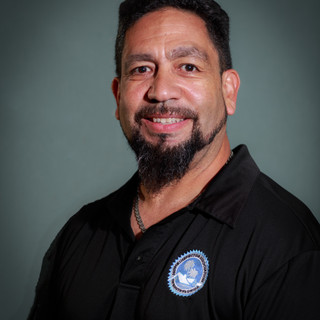
Raymond Ward is a Florida-licensed Mold Assessor (MRSA-2391), Mold Remediator (MRSR-3879) and Home Inspector (HI1164), and the principal of All Inspections 4U Environmental in Miami, Florida. He is a NORMI member, a CCPIA instructor teaching primarily in Spanish, and a DBPR-approved continuing education provider, developing and delivering courses in mold assessment, home inspection, wind mitigation, radon measurement and commercial building inspection. He has worked in the inspection industry since 2002 and has been licensed since 2012.
• Residential and environmental inspections: allinspections4u.com | allinspections4u@gmail.com
• Commercial inspections, property assessments and recertifications: commercialinspections4u.com | commercial@allinspections4u.com
• Telephone, either side: 954-802-8524
If you need an inspection in South Florida, or you would like to discuss anything in this article, get in touch.
