Raising the Floor: Seven Structural Gaps in Florida Mold Assessment
A mold assessment report is relied upon by a homeowner deciding whether to spend five or six figures. By an insurance adjuster deciding coverage. By an attorney deciding whether there is a case. By a physician who has been handed it by a patient who is unwell. And by a remediation contractor who will price and perform the work from the protocol inside it.
It is a health decision, a financial decision and a legal exhibit, all made on a document that nobody checked.
This is the first of eight articles about why that is, and about what could be done. Seven gaps follow, one per article. Six of the seven could be closed by the profession itself, voluntarily, without waiting for a single line of new legislation.
First, what Florida already got right
Florida began licensing mold assessors and mold remediators in 2010, which placed it among the small handful of states that regulate mold services at all. Sixteen years on, the state has a license, a disciplinary process, a mandatory insurance floor and a continuing education requirement. Most of the country still has none of that, and anything that follows should be read against that background rather than instead of it.
• Florida licenses this work at all. There is a license, a renewal cycle, a complaint process and an enforcement mechanism. That is a meaningful consumer protection which did not exist before 2010.
• The independence rule is exceptional. Section 468.8419 bars an assessor from performing or offering remediation on a structure they assessed within the preceding twelve months, and bars the reverse. It removes the single largest conflict of interest available in this trade. Nothing comparable exists in home inspection, and it deserves far more credit than it gets.
• The insurance floor is real. A one million dollar liability requirement means a consumer harmed by negligent work has somewhere to go.
• The laboratory tier is strong. Accreditation, published consensus methods and proficiency testing are all in place and functioning.
• The associations carried the load. For more than twenty years, training, credentialing and practice guidance in this industry have been produced by membership organizations and private providers, with no public funding and no mandate to do it. Whatever the gaps, they were not filled by anyone else.
What is missing
What Florida does not have, and what the wider industry does not have either, is a defined body of knowledge a practitioner is expected to hold, a defined standard for the document that practitioner produces, or any point at which anyone verifies that a newly licensed assessor has ever produced one competently.
That is the whole of the argument. Everything below is a consequence of it.
The seven gaps
• 1. The industry teaches to the hour, not to the competency. Fourteen continuing education hours a biennium, and nothing anywhere asks a licensee to demonstrate a skill.
• 2. The entry record is self-reported, and the work behind it is never seen. Field experience is evidenced by a list of project addresses. Nobody reads the reports.
• 3. There is no required curriculum before the license. A Florida home inspector completes 120 hours before sitting the examination. A mold assessor completes none.
• 4. The license is issued, and then the mentoring stops. No supervised first year, no structured peer review, and no point at which anyone reads a new assessor file.
• 5. Nobody has defined the deliverable. Two pages and twenty pages are equally compliant, which penalizes the assessor who does the work properly.
• 6. The chain is accredited at the laboratory and unregulated at the cassette. The analysis is governed. The pump, the cassette, the blank and the control are not.
• 7. Course approval and licensure are two systems that never meet. The one mandatory continuing education subject points at a standard of practice that was never written into rule.
Six of the seven need no new law
This is the part worth holding on to. A competency map can be published tomorrow. A minimum report content standard can be published tomorrow. A field sampling quality checklist costs nothing and requires no permission. A mentoring program and a peer review pool are ordinary association work. None of it waits on a legislature.
There is precedent, and it comes from this exact industry. ANSI/IICRC S520 governs how remediation is performed across the United States and is cited in litigation constantly. Florida never adopted it by statute. It became the standard of care because a professional body wrote it, practitioners used it, and the market and the courts came to expect it. The same road is open here.
A note on what this series is not
It is not an indictment of any agency, association, laboratory, school or colleague, and no organization or individual is criticized anywhere in it. Every gap described is structural. It lives in the rules themselves, or in the space between two sets of rules that were written separately and never reconciled. The people working inside those rules are, in the main, doing exactly what the rules ask of them. The argument is simply that the rules ask too little, and that the profession rather than the regulator is the right party to raise the floor.
These are the growing pains of a young profession, not the symptoms of a failing one. A trade that has held a license for sixteen years is roughly where home inspection stood in the mid-1990s, and home inspection closed a comparable set of gaps largely through association-published standards long before any legislature acted.
The next article takes the first gap: why this industry counts training in hours rather than in skills, and what that costs.
About the author.
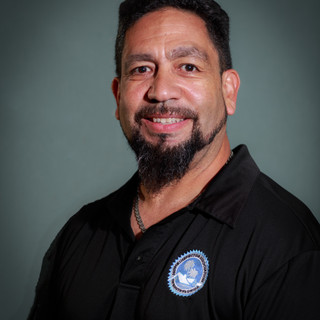
Raymond Ward is a Florida-licensed Mold Assessor (MRSA-2391), Mold Remediator (MRSR-3879) and Home Inspector (HI1164), and the principal of All Inspections 4U Environmental in Miami, Florida. He is a NORMI member, a CCPIA instructor teaching primarily in Spanish, and a DBPR-approved continuing education provider, developing and delivering courses in mold assessment, home inspection, wind mitigation, radon measurement and commercial building inspection. He has worked in the inspection industry since 2002 and has been licensed since 2012.
Residential and environmental inspections: www.allinspections4u.com | allinspections4u@gmail.com
Commercial inspections, property assessments and recertifications: www.commercialinspections4u.com | commercial@allinspections4u.com
Telephone, either side: 954-802-8524
If you need a mold assessment in South Florida, or you would like to discuss anything in this series, get in touch.
Statutory and rule references are to Chapter 468, Part XVI, Florida Statutes (mold-related services), including section 468.8411 (definitions and the ten square foot threshold), section 468.8413 (licensure requirements), section 468.8414 (licensure and licensure by endorsement) and section 468.8419 (prohibited conflicts); and to Florida Administrative Code Chapter 61-31, including rule 61-31.101 (license requirements and documentation of experience), rule 61-31.102 (examination) and rule 61-31.504 (continuing education). Approved licensure examinations are those published by the Department of Business and Professional Regulation, currently the ACAC Council-certified Indoor Environmentalist, Indoor Environmental Consultant and Microbial Consultant examinations. Technical references are to ANSI/IICRC S520 and ASTM D7391, together with published AIHA and U.S. EPA guidance.
This series describes the regulatory framework as understood in September 2026 and is offered as professional commentary. It is not legal advice, and it is not a statement on behalf of any regulator, association, laboratory or certifying body. Readers making licensing or compliance decisions should consult the current text of the statutes and rules, and the Department directly.

