Why Mold Assessment Training Counts Hours Instead of Skills
A Florida mold assessor renews their license every 2 years. To do it, they complete 14 hours of continuing education in subjects related to mold services. At no point in those 14 hours is anyone required to demonstrate that they can do anything.
This is the second article in the Raising the Floor series, and the first of the seven structural gaps in Florida mold assessment, taken one per article.
What the rule asks for
The number comes from the statute. Section 468.8416 requires at least 14 hours of continuing education every 2 years and leaves the criteria and the course content to the Department. The Department approves each course before it is offered, on the strength of a course outline, an hour count and a written statement of how the course relates to mold assessment or remediation. The topic areas it looks for are water and moisture intrusion, mold and mold safety, and standards of practice.
Courses are approved by subject category and by hour count. The hour is the unit of account. A licensee who sits through 14 hours has satisfied the requirement in full, and a licensee who sits through 14 hours and learns nothing has satisfied it equally. The structure measures attendance, because attendance is what it was built to measure.
To be fair to the rule, it does ask something more of online courses. A provider offering one must show how the course measures learning and checks comprehension at regular intervals. That is the right instinct, but it governs the course, not the practitioner. A comprehension check confirms that a student read a module. It does not confirm that they can do the work the module describes, and nothing anywhere in the renewal cycle asks them to.
Why the training market works this way
Continuing education in this industry is very widely given away free, or close to it. For laboratories, equipment suppliers, franchise systems and membership bodies it functions as a customer acquisition cost rather than as a product. That is a rational commercial decision and it has genuinely widened access to training, which matters in a trade where the alternative for many practitioners would be no training at all.
It also sets the market price of education at or near zero. When the price is zero, the economics reward the shortest credible path to a certificate rather than the deepest one. Serious instructional design costs real money to build: assessment items, worked case files, practical exercises, a revision cycle. None of that can be recovered at a price of nothing.
Nobody in that chain is behaving badly. The incentive structure simply does not pay for depth, and the predictable result is a licensee who has accumulated hours without ever being asked to demonstrate a skill.
What would close it
• Publish a competency map. Define what an assessor must be able to do, not what they must have sat through. Read a psychrometric chart and calculate dew point at a specific surface. Build a sampling plan with a defensible control. Distinguish Condition 1, 2 and 3 under ANSI/IICRC S520. Identify an HVAC system as a mold driver rather than a mold victim. Write a protocol a contractor can price without calling for clarification.
• Approve courses against the map, not against the clock. An association can publish such a map immediately and mark its own catalog against it. Regulators tend to follow a standard that already exists and is already in use, rather than one that has only been proposed.
• Make at least some training assessed. A short applied exercise marked by a human is not expensive, and it is the entire difference between attendance and learning.
None of the three needs a rule change. All of them are ordinary work for an association or a training provider willing to do it.
If you are hiring a mold assessor. The license number tells you the assessor has accumulated hours. It does not tell you what they can do with them. Ask what mold-specific training they have completed in the last 2 years and what it covered. An assessor who is proud of their training will enjoy the question; that reaction is itself informative.
The next article looks at the record an assessor submits to become licensed in the first place, and at what nobody ever checks.
About the author.
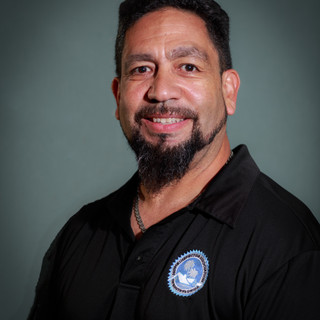
Raymond Ward is a Florida-licensed Mold Assessor (MRSA-2391), Mold Remediator (MRSR-3879) and Home Inspector (HI1164), and the principal of All Inspections 4U Environmental in Miami, Florida. He is a NORMI member, a CCPIA instructor teaching primarily in Spanish, and a DBPR-approved continuing education provider, developing and delivering courses in mold assessment, home inspection, wind mitigation, radon measurement and commercial building inspection. He has worked in the inspection industry since 2002 and has been licensed since 2012.
• Residential and environmental inspections: allinspections4u.com | allinspections4u@gmail.com
• Commercial inspections, property assessments and recertifications: commercialinspections4u.com | commercial@allinspections4u.com
• Telephone, either side: 954-802-8524


