Radon Testing in Florida: Who Must Test, and What a Result Means
Every county in Florida has homes that have tested above the federal action level for radon. About one in five Florida homes that have been tested comes back above it.
And Florida has never set an action level of its own.
That combination surprises people, and it is the right place to start, because almost everything else about radon in this state follows from it.
Florida certifies the tester, not the number
Florida regulates radon through section 404.056 of the Florida Statutes and Chapter 64E-5 of the Florida Administrative Code. What those rules do is certify the people who measure and mitigate, define how measurements are conducted and recorded, and require testing in a specific set of buildings.
What they do not do is declare a number above which a building is unsafe. There is no Florida action level.
The reference point everyone uses instead is the federal figure of 4.0 picocuries per liter, published by the Environmental Protection Agency. It is worth being precise about what that number is: it is the level at which the EPA recommends taking action, not a boundary between safe and dangerous. Radon risk is continuous. It does not begin at 3.9 and become real at 4.1.
The principle that fills the gap is ALARA, as low as reasonably achievable. A result of 3.2 is not a pass. It is a lower number than 4.5, and reducing it further may still be worth doing.
Who is actually required to test
For most Florida property, radon testing is voluntary. There is no general requirement that a house be tested, before sale or at any other time.
There is a mandatory testing requirement, and it applies to buildings that serve children. Under section 404.056(4), measurement is required in public and private schools serving kindergarten through grade twelve, in licensed daycare facilities, and in twenty-four hour care facilities, where those buildings sit in counties the Department has designated as intermediate or elevated.
The measurement must cover twenty percent of habitable first-floor spaces.
This is the part operators most often learn about from somebody else. A school or daycare changes hands, or a city asks for a certificate during a licensing review, and the obligation surfaces with a deadline attached.
Real estate disclosure is not a test
Section 404.056(5) requires a radon notification in certain real estate transactions. Florida buyers and tenants see that paragraph regularly, and a great many of them read it as evidence that something was checked.
It is not. The disclosure states that radon exists, that it can accumulate in buildings, and that testing is the way to find out. It reports nothing about the building in front of you. If you want to know what the building reads, somebody has to measure it.
Two things Florida does not do, that the industry routinely claims
Both of these appear in marketing material across this state, and both are wrong in ways that matter.
• Florida does not approve laboratories. There is no such thing as a DOH-approved radon laboratory. The correct term is a Florida Recognized Laboratory. Laboratories earn their approval nationally, through the recognized proficiency programs, and the Department permits samples to be sent to laboratories on that listing. A company advertising a state-approved lab is describing something that does not exist, which is a small thing on its own and a reasonable indicator of how carefully the rest of their work is described.
• Florida does not follow the national consensus standards. The ANSI and AARST standards are what the national bodies publish, and they are good documents. Florida rules are not built on them. The state operates on its own administrative code, and the supporting guidance Florida points to is the EPA Citizen Guide to Radon and the Home Buyer and Seller Guide to Radon. A technician working to the national standard because that is what the national organization publishes may be working to a different document than the one Florida actually enforces.
What a measurement actually involves
A short-term measurement is the normal starting point. In practice that means a device deployed for a minimum of forty-eight hours, under closed-building conditions, in a location chosen to represent the occupied space rather than to produce a comfortable number.
Closed-building conditions matter more than anything else on the list. Radon accumulates indoors. A test run with windows open, or in a building being aired out by helpful staff, will read low and will be worthless. Anyone deploying a device should explain this to whoever holds the keys, and any report should state whether those conditions were maintained.
Beyond that, a defensible measurement records a specific set of things:
• The device type and the serial number of every device deployed.
• Deployment and retrieval date and time, from which the exposure period is calculated.
• The exact location of each device, and why that location was chosen.
• A quality assurance measure, most commonly two co-located devices deployed as a duplicate pair, so that the two results can be compared against each other.
• The laboratory that performed the analysis.
• Whether closed-building conditions were maintained throughout.
For mandatory testing, results are reported to the Department on its own form. That form, not an email from the laboratory, is the record.
The records outlive the people who ordered the test
Measurement records must be retained for five years. Records relating to mandatory testing and exposure are held for twenty.
Twenty years is longer than most daycare directors stay in post, and considerably longer than most filing systems survive. If you operate a facility subject to mandatory testing, the practical advice is to keep the report somewhere institutional rather than somewhere personal, because the obligation attaches to the building rather than to whoever happened to arrange it.
What a single result does and does not tell you
A forty-eight hour measurement is a snapshot of a building that does not hold still. Radon concentration moves with the season, with barometric pressure and rainfall, with how the building is occupied, and with how the air conditioning runs. The same room can return materially different numbers in March and in August.
That does not make short-term testing unreliable. It makes a single number a starting point rather than a verdict. A result sitting close to the action level generally deserves a follow-up measurement before anyone commits to mitigation, and a result well above it deserves action rather than another test.
One more distinction worth holding on to: measurement and mitigation are separately certified activities in Florida. The person who measures your building and the person who installs a system to reduce it are working under different certifications, and there is a reasonable argument for their being different people.
If you operate a school or a daycare. Three things. Find out whether your county is designated intermediate or elevated, because that single fact decides whether any of this is optional for you. If it is not optional, find the last measurement report and check its date, not just its existence. And keep it where the building keeps its records rather than in a director personal files, because the retention obligation runs for twenty years and will outlast several staff changes.
If you are buying a Florida home. The disclosure paragraph in your contract is not a test result. Testing is inexpensive relative to almost every other line in a real estate transaction, and it is one of the few things you can still measure directly rather than infer. Ask whether closed-building conditions will be maintained for the full period, ask whether a duplicate device will be deployed, and ask which laboratory will analyze it.
The free option, which nobody mentions
The Florida Department of Health offers free radon test kits. For a homeowner who simply wants to know whether there is anything to think about, that is a sensible first step and there is no reason for anyone in this industry to pretend otherwise.
A professional measurement earns its cost when the result has to be defensible to somebody else: a regulator, a purchaser, a licensing body, an insurer or a court. That is a different job from satisfying your own curiosity, and it is worth being honest about which one you need.
About the author.
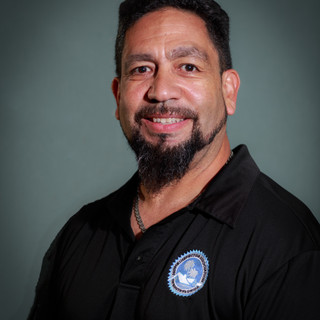
Raymond Ward is a Florida-licensed Mold Assessor (MRSA-2391), Mold Remediator (MRSR-3879) and Home Inspector (HI1164), and the principal of All Inspections 4U Environmental in Miami, Florida. He is a NORMI member, a CCPIA instructor teaching primarily in Spanish, and a DBPR-approved continuing education provider, developing and delivering courses in mold assessment, home inspection, wind mitigation, radon measurement and commercial building inspection. He has worked in the inspection industry since 2002 and has been licensed since 2012.
• Residential and environmental inspections: allinspections4u.com | allinspections4u@gmail.com
• Commercial inspections, property assessments and recertifications: commercialinspections4u.com | commercial@allinspections4u.com
• Telephone, either side: 954-802-8524
If you need radon measurement in South Florida, or you would like to discuss anything in this article, get in touch.
References are to section 404.056, Florida Statutes, including subsection (4) on mandatory testing and subsection (5) on real estate disclosure, and to Chapter 64E-5, Florida Administrative Code, covering certification, measurement practice and record retention. The 4.0 picocuries per liter figure is the United States Environmental Protection Agency action level; Florida has not adopted an action level of its own. Supporting guidance is the EPA Citizen Guide to Radon and the Home Buyer and Seller Guide to Radon. This article describes the framework as understood in September 2026 and is professional commentary rather than legal advice. Anyone making a compliance decision should consult the current rule text and the Florida Department of Health directly.


